Property
Houses and Flats Are Pulling Apart: What Birmingham's Price Divergence Means for Buyers
A growing gap between detached house prices and apartment values is reshaping who can afford what — and where — across the city.
4 min read
Property
A growing gap between detached house prices and apartment values is reshaping who can afford what — and where — across the city.
4 min read
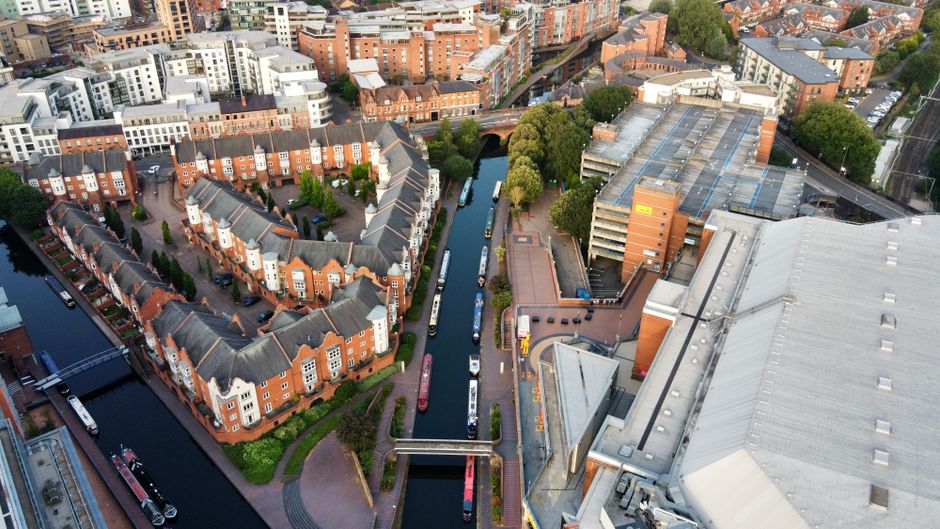
Birmingham's housing market has split in two. Data covering the 12 months to June 2026 shows the median price for a detached house in the city has climbed to £387,000, while the median for a flat or apartment has barely moved, sitting at £162,000 — a gap that has widened by roughly 18 percent since mid-2024. That divergence is not a blip. It is becoming structural, and it is forcing buyers, investors and city planners to recalibrate.
The timing matters. After two years of elevated mortgage rates hammering overall transaction volumes, the Bank of England's successive base rate cuts since January 2026 — bringing the rate down to 3.75 percent by May — have revived demand. But they have not revived it equally. First-time buyers who finally found affordability returning have crowded into the apartment market, keeping prices flat through sheer supply. Families trading up, meanwhile, have competed intensely for the dwindling stock of three- and four-bedroom houses in established neighbourhoods, pushing those prices sharply higher.
Harborne is the clearest illustration. Semi-detached houses on Metchley Lane and the streets surrounding Harborne High Street changed hands at an average of £420,000 in the first half of 2026, up from £368,000 in the same period last year. Ten minutes away by tram, new-build apartments in the Westside development near Brindleyplace have sat on the market for an average of 67 days — nearly three weeks longer than in 2024 — with asking prices trimmed between five and eight percent from original listings. The contrast is stark.
Moseley tells a similar story. Victorian terraces on St Mary's Row and around the village green are routinely achieving full asking price or above. The local branch of Purplebricks reported in its June market commentary that Moseley houses received an average of 2.3 offers each in May 2026. Comparable-sized apartments in the same postcode — many of them conversions in older commercial buildings along Alcester Road — are seeing one offer, if that. Landlord exit sales are adding to apartment supply as higher capital gains tax thresholds introduced in the March 2026 budget encourage some investors to liquidate.
The Jewellery Quarter presents its own variant of the problem. The area's conversion apartments, which attracted strong investor and young-professional demand between 2019 and 2023, are now caught between a softer rental yield environment and the reluctance of owner-occupiers to pay a premium for a one-bedroom flat without outdoor space. Prices per square foot in the quarter have dipped around four percent year-on-year according to figures compiled by Birmingham City Council's housing intelligence unit, published in May 2026.
The divergence creates real decisions. For buyers with a budget under £200,000, the apartment market offers genuine negotiating power right now — sellers are more flexible than at any point in the last four years. The Affordable Homes Programme administered through the West Midlands Combined Authority still has shared-ownership allocations available on new apartment schemes in Digbeth and along the A38 corridor, which can cut the effective entry price further.
For those eyeing houses, the calculus is harder. Stock in suburbs like Kings Heath and Bournville is genuinely tight — fewer than 40 detached properties were listed across both neighbourhoods combined in June 2026, according to Rightmove's Birmingham data. Waiting for the market to cool may mean waiting a long time. Mortgage advisers at firms including Birmingham-based John Charcol and Alexander Hall are reporting that clients are increasingly choosing to fix for two years rather than five, betting that rates will drift lower before their deal expires.
The longer-term question is what the divergence does to the city's new-build pipeline. Developers who pre-sold apartment schemes off-plan in 2023 and 2024 are now delivering units into a market that has softened beneath them. Several schemes in the Eastside regeneration zone have delayed phased releases. If house prices keep rising while flat prices stagnate, the economics of building anything other than houses — which Birmingham's density and land constraints make difficult — become increasingly awkward for the whole city.
Property
Property
Property
Property
About this article
Published by The Daily Birmingham
Spread the word
Daily brief
Free, in your inbox before 7am. Weekdays.